
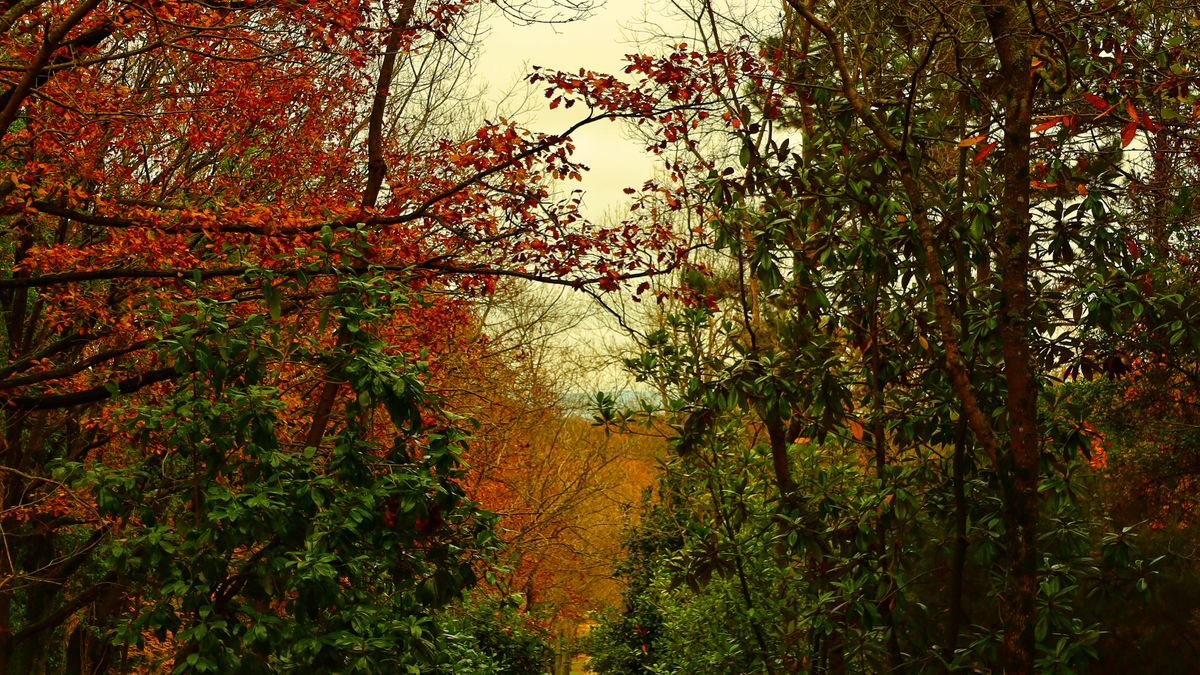
There's a particular kind of disappointment that comes from arriving home with a memory card full of slightly rushed shots taken from a gateway you weren't sure you were allowed to stand in. Most of us have done it: seen a promising view over a hedge, clambered onto a verge to get above the cow parsley, and spent the whole time half-listening for a farmer's quad bike. The photographs rarely reward the anxiety.
The good news is that the public rights of way network across England, Wales, Scotland and Northern Ireland is extraordinarily generous. Thousands of miles of footpaths, bridleways and byways thread through the finest landscapes in the country, and almost all of them come with natural vantage points built in: gates, stiles, bridges, stone walls and wide verges where you can stop, set up, and compose properly without stepping a metre off the line.
Learning to use those features well is a genuine skill. It slows you down, keeps you legal, and — perhaps counter-intuitively — tends to produce better pictures than the scramble-over-the-fence approach.
A gate is the single most useful piece of furniture on any walk. It gives you an elevated, stable platform, a clean frame, and a legitimate reason to be standing still. Many landscape photographers build whole portfolios around gateways, and there's a reason: the opening itself acts as a natural border, drawing the eye from foreground to distance.
When you find a good one, look for the following:
Stiles are less comfortable but often higher, giving you a slightly raised viewpoint over hedgerows. Bridges — especially old packhorse bridges and footbridges over streams — are superb for leading lines. Stand to one side so walkers can pass, and never block the crossing itself for longer than a minute or two.
Wide verges are the quiet hero of roadside landscape photography. Many rural lanes in the UK have a strip of rough grass between the tarmac and the hedge, and where it's uncultivated and clearly part of the highway, it's generally fair to stand there. It keeps you off the road, out of the crop, and gives you just enough height to lift the horizon above the hedge line.
A few practical points:
If you're shooting from a verge on a narrow lane, wear something visible, keep an ear open for vehicles, and step back against the hedge when one approaches. A tripod on a single-track road at dusk is an invitation to a very unpleasant conversation.
The countryside is a working environment, and the honesty of a good photograph depends partly on not damaging the thing you're photographing. A few rules of thumb will keep you and the land in good order.
If you do want access to private land — a bluebell wood, a particular hilltop, a lake shore — the right approach is to ask. Many landowners are surprisingly amenable to a polite request from someone who clearly knows the Countryside Code and intends to keep to it.
Footpaths are shared. A photographer with a tripod and a rucksack takes up more space than a walker with a dog, and it's easy to forget that others have come out for the same peace and quiet you have.
Stand to one side at gates and stiles so people can pass without breaking stride. Avoid setting up in the middle of a narrow path where a group will have to squeeze past your kit. If someone is clearly enjoying a view, give them a moment before you take your shot — and if they ask what you're photographing, tell them. Most people are curious rather than annoyed, and a brief chat often ends with a tip about a better viewpoint further along.
Keep voices low, especially in the early morning when sound carries across a valley. And if you're walking with a group, agree in advance who's stopping for photographs and who's carrying on, so nobody feels rushed or abandoned.
The discipline of shooting only from the footpath sharpens your eye. You start to notice how a gate's shadow falls across a track, how a stile frames a distant church tower, how a verge of cow parsley can be a foreground in its own right. You learn to wait for light rather than chase position, and to work a single viewpoint thoroughly instead of dashing between half a dozen.
That patience shows in the final image. A photograph made from a legitimate, well-chosen spot has a calmness to it — no half-glimpsed anxiety, no awkward tilt from a hurried clamber. It's also a photograph you can show without a caveat.
So next time the light looks promising, take the path. Walk it slowly. Stop at the gate. Use the stile. Let the landscape come to you, and let the footpath do the work of getting you there.

Hi, my name is Anthony kuber. I am artist and fashion designer.
I love to travel and writing blogging.
Your email address will not be published. Required fields are marked *
Software Developer & Writer
Hey, I'm Diva, a developer and writer blending code and creativity. I'm driven by a deep curiosity and a relentless pursuit of excellence. Join me as I craft digital solutions and captivating stories.


