
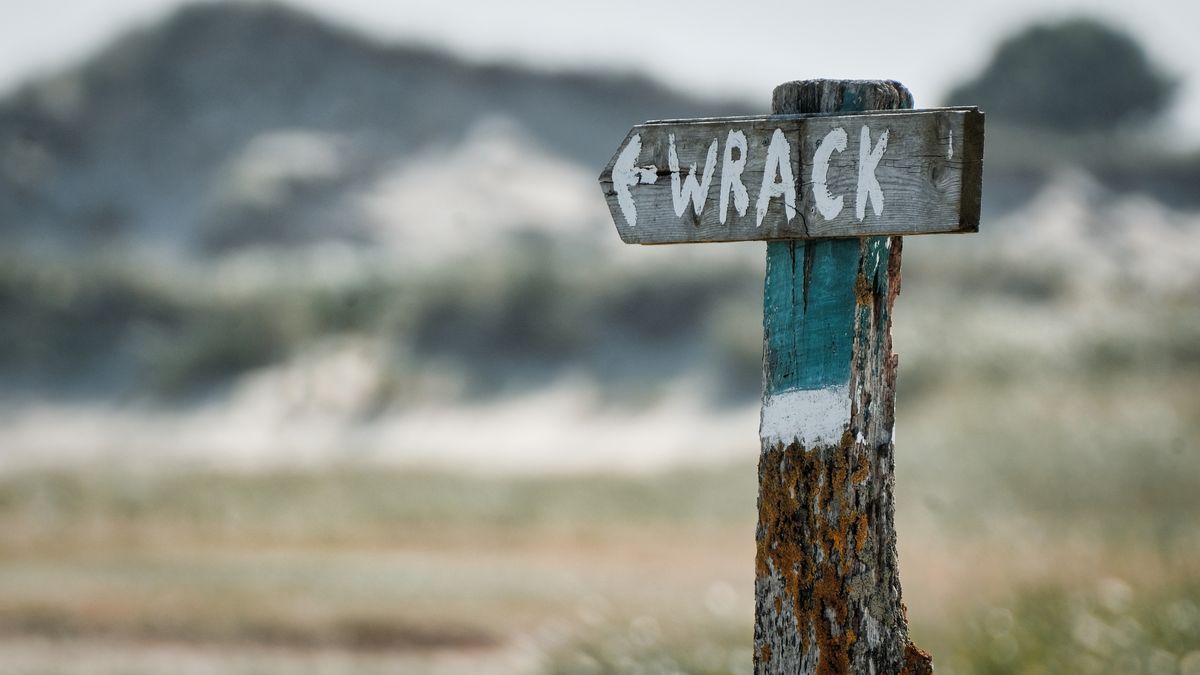
In the UK, a public right of way is not a suggestion. It is a legal right to pass along a defined line across land, and waymarkers are the signs that tell you where that line goes. A single yellow arrow on a gatepost can be the difference between a pleasant afternoon and an awkward conversation with a farmer. Learning to read those signs takes about ten minutes, and it will make you a calmer, more confident walker.
Yellow is the colour for a public footpath. You will see it as a painted arrow on a wooden post, a metal disc, or a small plastic waymarker nailed to a stile. A yellow arrow means you may walk on foot only. No bikes, no horses. The path is usually a narrow line across a field, through a gate, or along a hedgerow. If the arrow points diagonally, it is telling you the path continues in that direction, not that you must scramble over a fence. Follow the line of the arrow, then look for the next one.
Footpaths often cross private land. You have the right to walk the line, but you must not stray from it. If you are in a field with a crop, keep to the edge or the marked line. If the path is overgrown, you are still entitled to use it, but you may need to push through. Local councils have a duty to keep paths clear, but in practice, a little patience helps.
Blue arrows mark bridleways. These are for walkers, horse riders, and cyclists. You will often find them on wider tracks and field edges. A bridleway can be muddy and churned, so wear appropriate footwear. Red arrows are rare but important: they mark a restricted byway, open to walkers, horses, cyclists, and horse-drawn vehicles, but not to motor vehicles. A byway open to all traffic may have a red arrow too, though it is legally open to cars — you will seldom see one that feels like a road.
White arrows or plain discs usually indicate a permissive path. This is not a public right of way. The landowner has given permission for you to walk there, and they can withdraw that permission at any time. Permissive paths are often created to keep walkers away from a dangerous area or a sensitive crop. Treat them with extra care: close gates, keep dogs close, and do not assume the route will be there next year. If a sign says "permissive path" and nothing else, you are a guest.
Waymarkers do not exist in isolation. A yellow arrow may be paired with a small sign saying "Public Footpath" and a grid reference. That grid reference is gold dust if you are navigating with a map. Write it down or photograph it. Some signs include the name of the farm or the parish, which helps you confirm you are on the right line.
Farmland is a workplace. A yellow arrow may point across a field of wheat or a pen of sheep. You have a right to walk the line, but you also have a responsibility to do it sensibly. Keep to the headland if the crop is tall. Close every gate behind you, even if it was open when you arrived. If a bull is in the field, and it is with cows and calves, find another way or turn back — the right of way does not make it safe.
Dogs are a common flashpoint. On a public footpath, you must keep your dog under control and preferably on a lead around livestock. On a bridleway or permissive path, the same rules apply. If a sign says "dogs on leads", it is not a request. It is a condition of the path.
Sometimes a waymarker points one way and your map says another. Trust the map, then look for the next waymarker. Sometimes a landowner has moved a sign or a path has been diverted. If you are unsure, do not climb a fence into a field of unknown livestock. Retreat to the last clear waymarker and try again. If a path is genuinely blocked, report it to the local council's rights of way team. They maintain the definitive map, which is the legal record of every public path in the area.
Reading waymarkers correctly is not about being pedantic. It is about respect: for the farmer whose land you cross, for other walkers who rely on the route, and for your own right to be there. A yellow arrow is a small thing, but it carries a lot of history and a lot of law. Follow it, and you will find some of the best miles in the country.

Hi, my name is Anthony kuber. I am artist and fashion designer.
I love to travel and writing blogging.
Your email address will not be published. Required fields are marked *
Software Developer & Writer
Hey, I'm Diva, a developer and writer blending code and creativity. I'm driven by a deep curiosity and a relentless pursuit of excellence. Join me as I craft digital solutions and captivating stories.


