
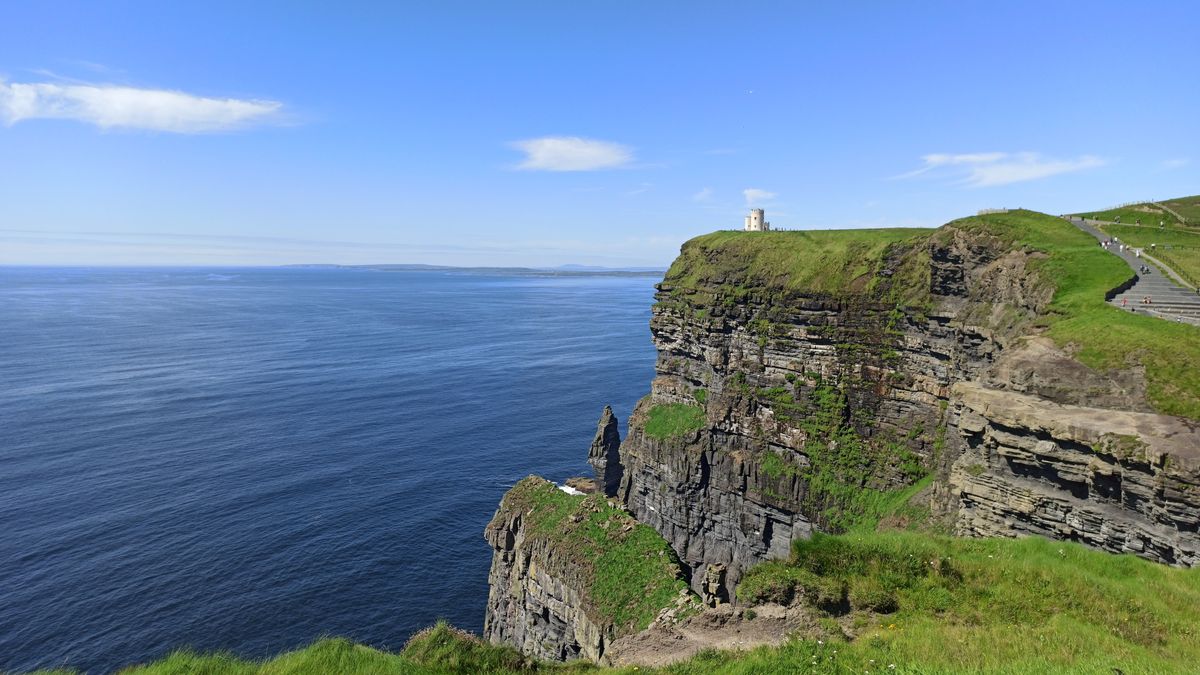
The heaviest thing in most long distance walkers' rucksacks is not the tent, the sleeping bag or the waterproofs. It is food and water. Two litres of water weighs two kilograms; five days of rations can add four or five more. Carry it all from the start and you will be miserable by mid-afternoon, which is exactly when you still have eight kilometres to go.
The solution is not to carry less and go hungry. It is to treat a long distance path as a chain of short walks between places where you can eat, drink and restock. Get that planning right and your pack stays light, your morale stays high, and you get to see the villages and pubs that most through-walkers rush past.
Spread out your maps and guidebook before you go and mark every settlement that has anything useful: a village shop, a pub serving food, a café, a garage, a bakery, a village hall with a tap. Then work out the gaps in walking time rather than map distance, because a hill can turn three kilometres into an hour.
The key question for each stop is simple: will I be there when it is open, and is it worth the detour? A village two kilometres off the path adds forty minutes and four kilometres of walking. That is well worth it for a shop, far less so for a cup of tea. Note down the following for every potential stop:
On most UK trails you will not need to carry more than a litre at a time in cool weather, provided you refill relentlessly. Churchyards and cemeteries are the quiet heroes of British walking: many have an outside tap for flowers, and nobody minds a walker filling a bottle. Pubs and cafés will almost always refill yours, especially if you buy a coffee or a packet of crisps.
Train yourself to top up whenever an opportunity appears, even if your bottle is half full. Waiting until you are empty means you will be anxious, then desperate, then drinking from a field trough. A few practical habits:
For most walkers the comfortable pattern is one bought hot meal a day — usually an evening pub meal, occasionally a cooked breakfast — with lightweight food carried for everything else. That means roughly 700 to 900 grams of dry food per person per day, which is manageable if you choose sensibly.
Good resupply buys from village shops are oatcakes, hard cheese, nuts, dried fruit, chorizo or salami, peanut butter, porridge oats, instant noodles, flatbreads and chocolate. Tins and jars are heavy and slow to open; leave them on the shelf. Aim to arrive at each shop with a list rather than a vague hope, because small shops have small ranges and you may need to make two or three purchases work as a day's food.
Rural Britain keeps unusual hours, and they catch out even experienced walkers. Village shops often shut at five or six, and some still close for a half day midweek. Pubs commonly serve food from noon until two, then from six until half eight or nine — arrive at three in the afternoon and you may get a packet of crisps and nothing else.
Sundays and bank holidays are the biggest trap. Many village shops close entirely on Sunday, and some on Monday too. Winter hours shrink further, with pubs opening only at lunchtime and closing for weeks in January. Before a long trip, ring ahead or check current listings for the specific villages you are relying on, and always have a plan B written on the map margin.
Structure each day around two halves: morning to a lunch stop, afternoon to an evening stop. Eat a proper lunch where you can, buy food for the following day at the same time, and carry only what you need until the next shop. A small emergency meal — a dehydrated pouch or two packets of noodles — lives at the bottom of the pack and is replaced when used, never raided out of boredom.
Posted supplies, or a box left with a friendly bed and breakfast, can bridge the genuinely empty stretches, such as moorland crossings and remote coastal sections. Do this and the long paths open up: you will walk further, complain less, and finish the day looking forward to your dinner rather than resenting your rucksack.

Hi, my name is Anthony kuber. I am artist and fashion designer.
I love to travel and writing blogging.
Your email address will not be published. Required fields are marked *
Software Developer & Writer
Hey, I'm Diva, a developer and writer blending code and creativity. I'm driven by a deep curiosity and a relentless pursuit of excellence. Join me as I craft digital solutions and captivating stories.


